Grading Projects
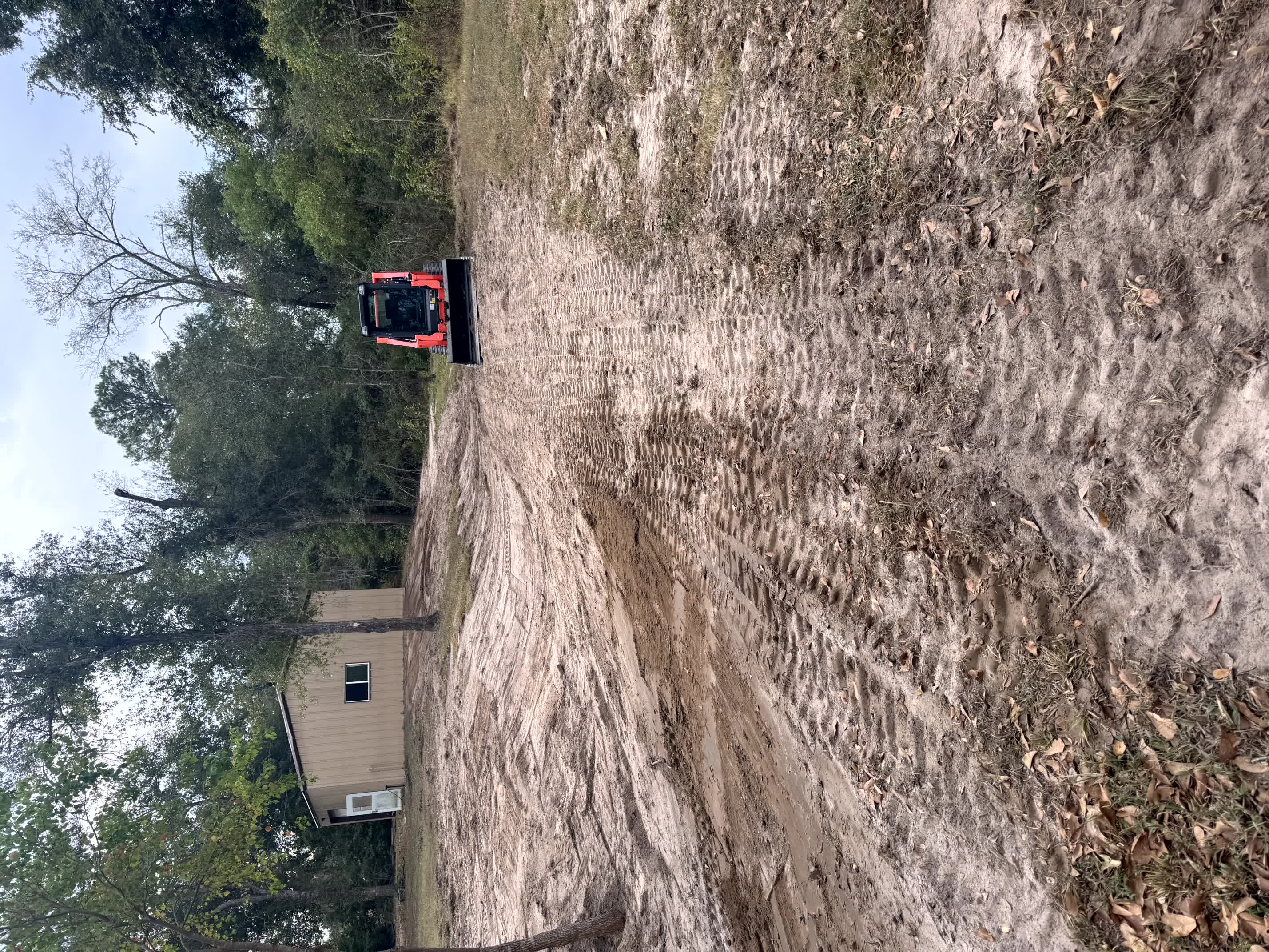
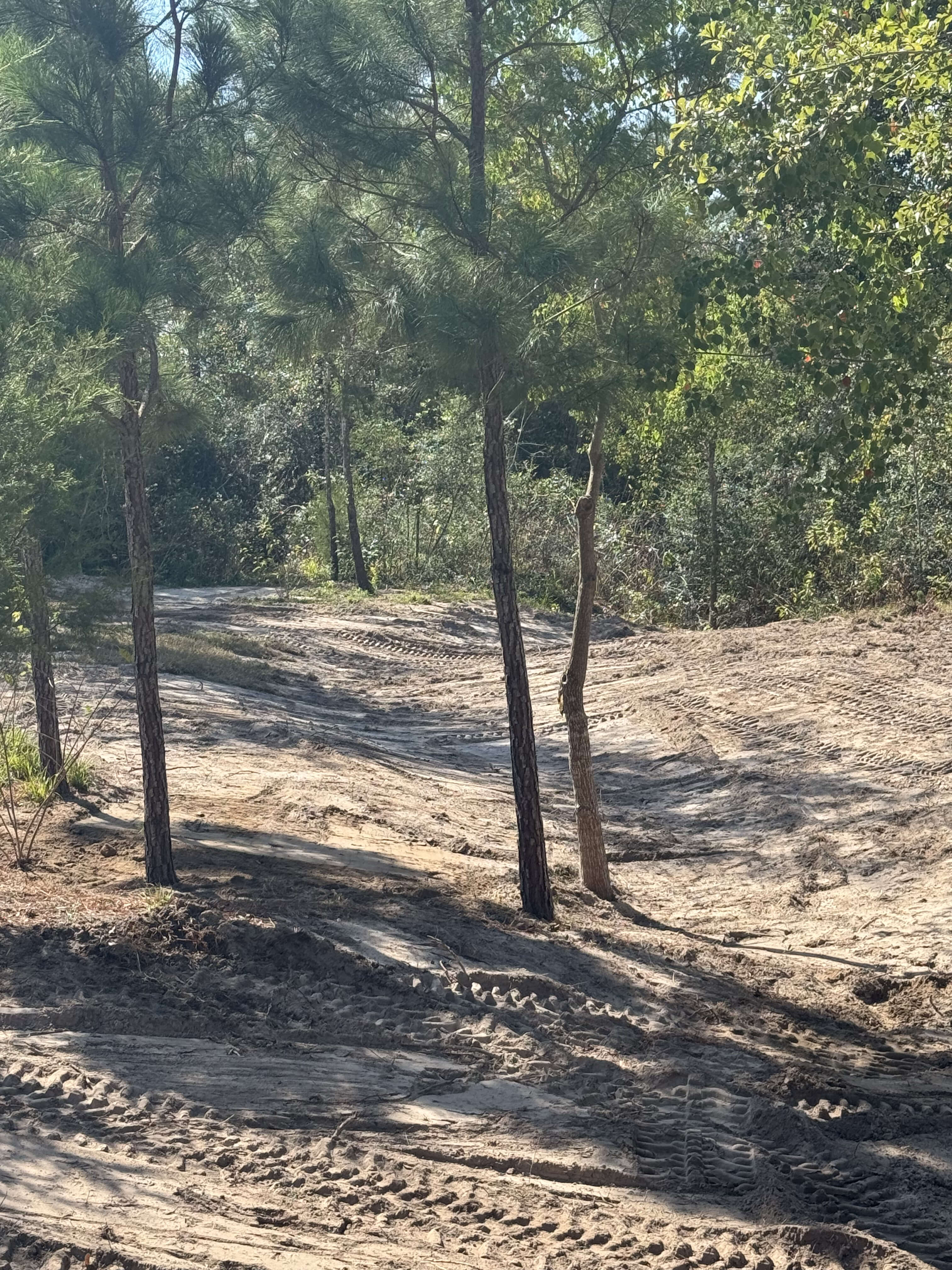
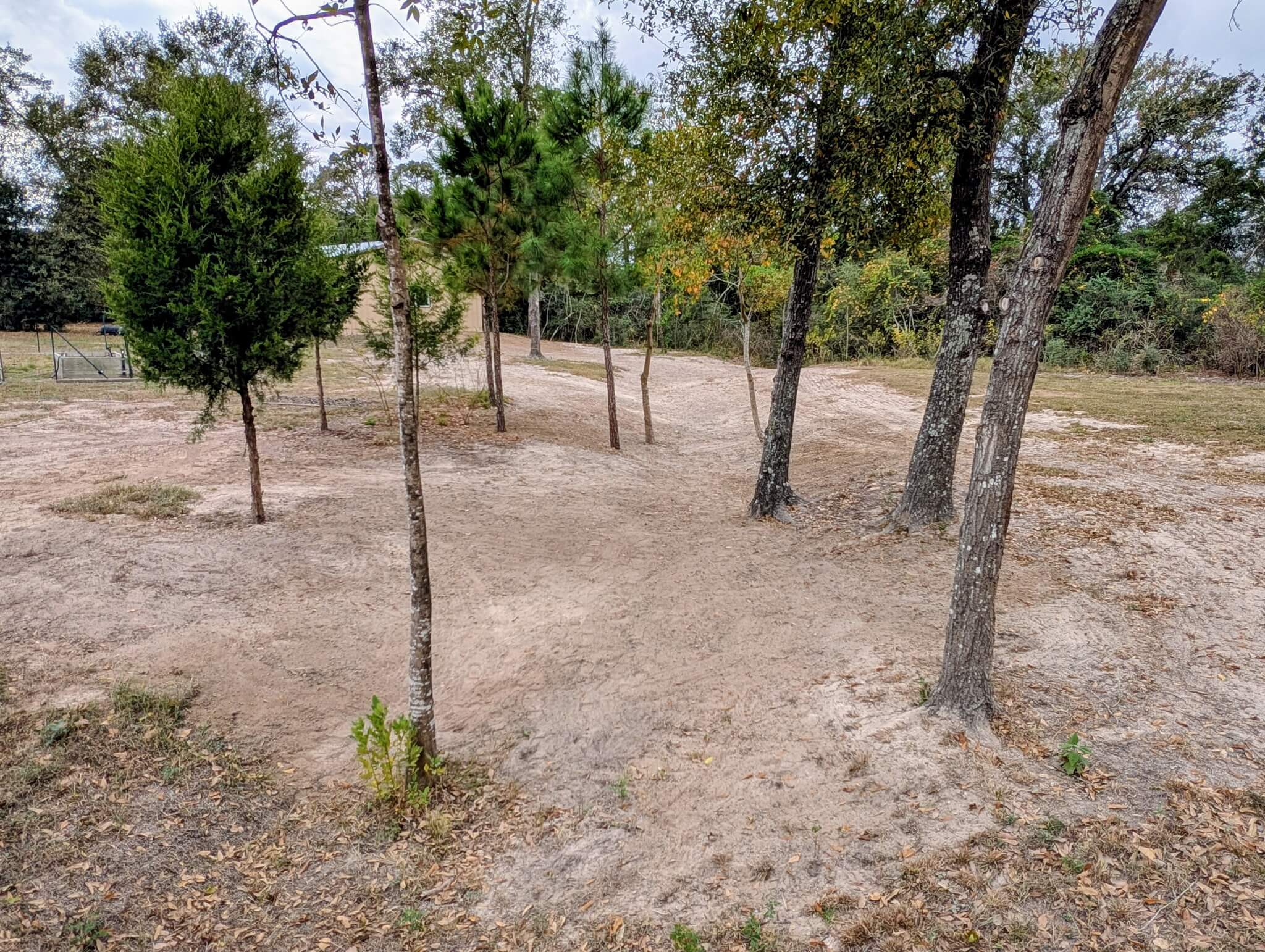
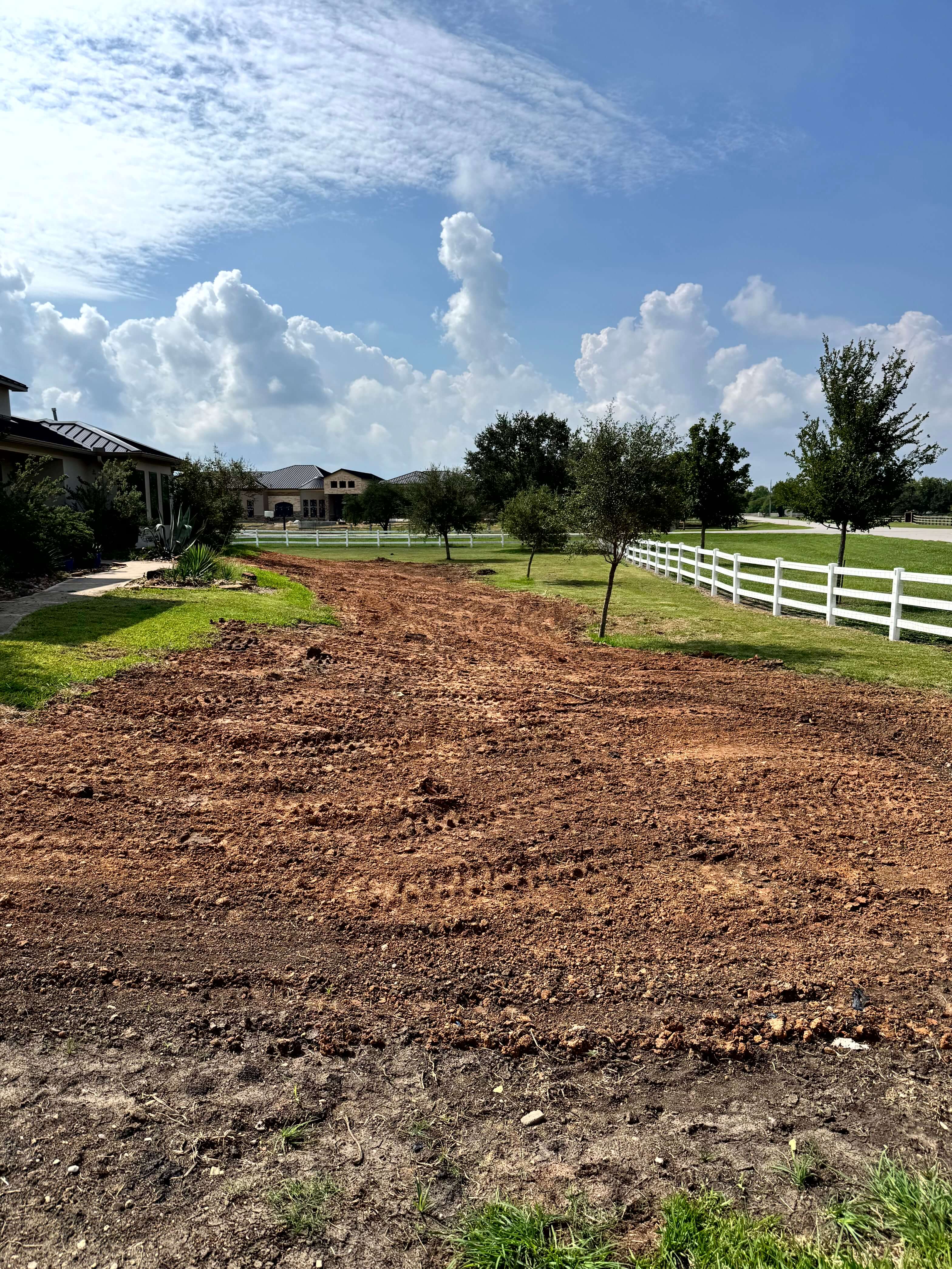
Click to expand
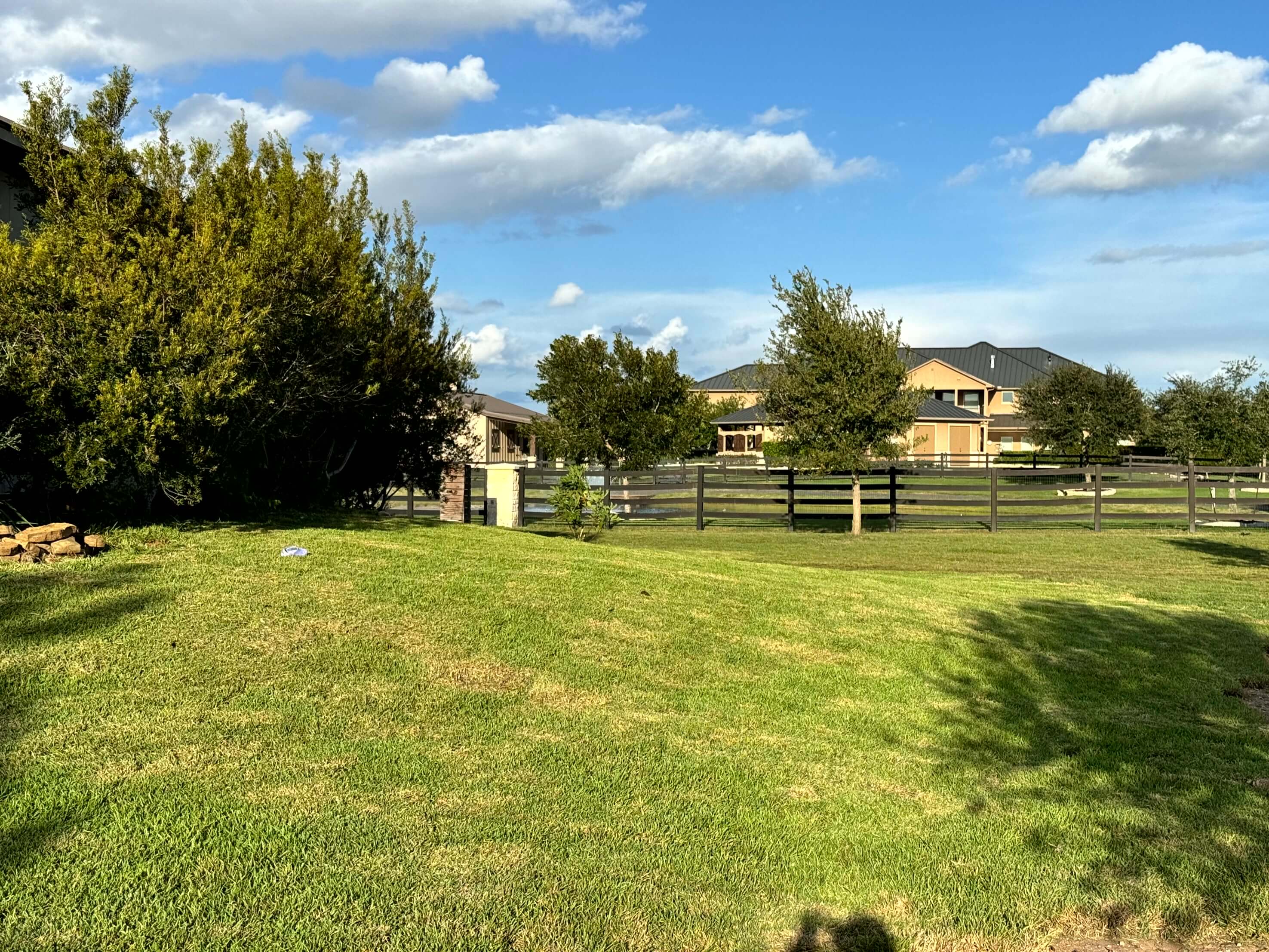
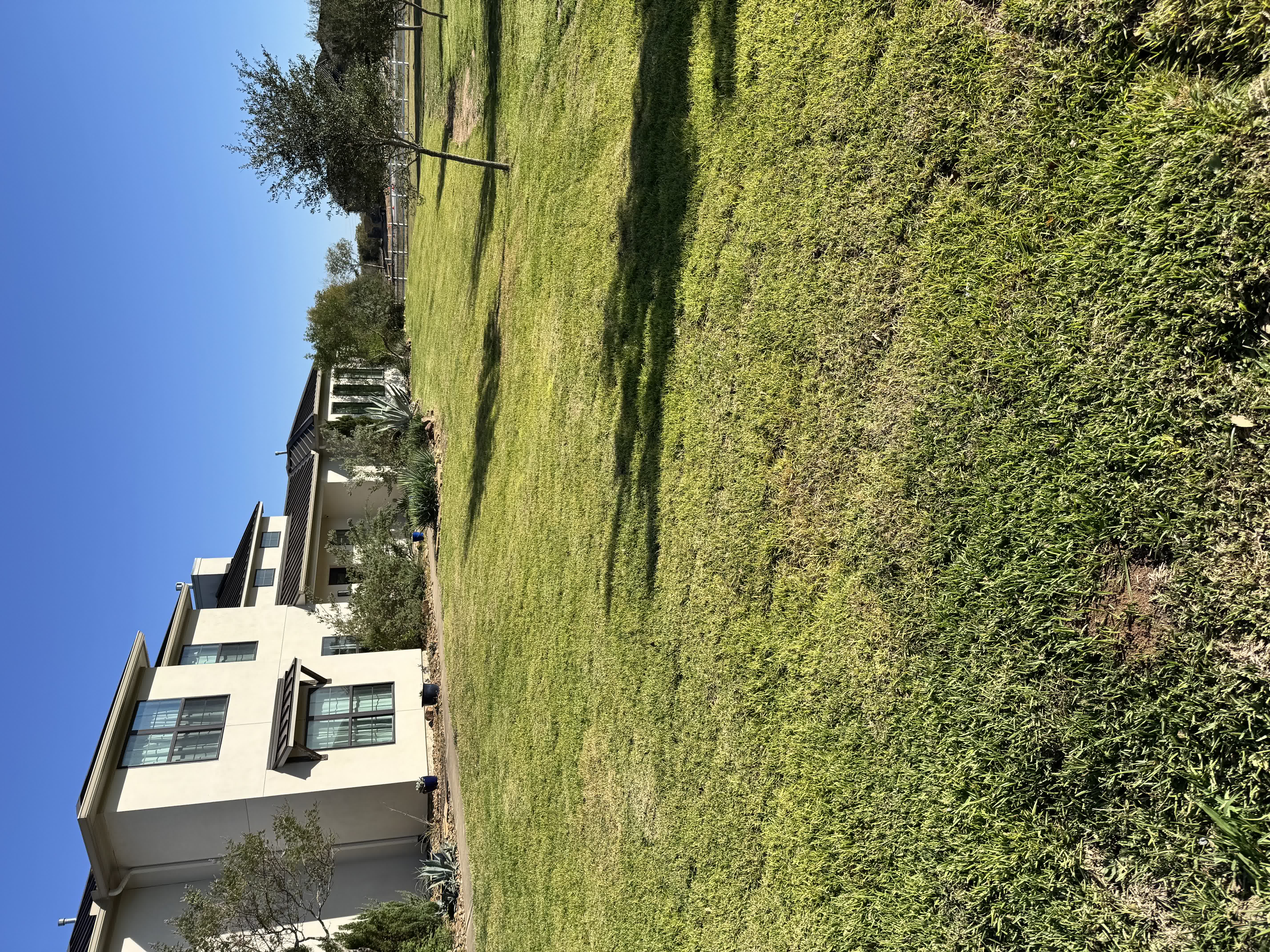
Bellville Regrading Project — Site preparation before grading begins.
Yard Grading Guide
What grade reading, cut/fill planning, and proper compaction look like on West Houston properties — written by the crew that does the work.
Get an Instant EstimateLast updated: · Written by the Neptune Solutions crew
Most yard drainage problems are grade problems. Water moves where gravity tells it to — and if your yard's existing grades direct water toward your house, toward a low spot in your lawn, or along a path that conflicts with your neighbor's drainage, no amount of French drains or surface work will fully fix it. The correct solution is to change the grades.
Yard grading sounds simple — move dirt until the yard slopes the right way. But done poorly, regrading creates new problems: compaction issues that cause settlement within a year, transitions that push water onto a neighboring property, or slopes that look right visually but don't hit the minimum 2% grade needed to shed water reliably. Here's how we approach it.
Grading in the Houston area is harder than it looks
West Houston's terrain is nearly flat — which means achieving meaningful drainage slopes requires careful grade work, and sometimes importing fill material to build up low areas that can't be fixed by cutting alone. The soil is predominantly expansive clay, which expands when wet and contracts when dry, making compaction critical to prevent post-grading settlement. And because lots here are often large and relatively flat, a small error in finished grade — even 1 or 2 inches in the wrong direction — can mean water still ponds after the work is done. We shoot grades with a laser level before and after every job to make sure the numbers are right, not just the appearance.
What does yard grading cost in Katy, Richmond, or Sugar Land?
Most residential regrading jobs in the West Houston area run $3,000–$15,000 depending on the size of the area, how much material needs to move, and whether imported fill is required. A focused regrading job around a foundation (500–1,500 sq ft) often lands in the $3,000–$6,000 range. Larger lots or properties with significant fill needs run higher. We provide free on-site estimates — site conditions vary too much to give a useful number without walking the property.
The first thing we do on a grading job is shoot elevations across the entire area with a laser level. That means setting the level, running a grade rod to multiple points in a grid, and recording exactly what the existing ground elevation is at each point relative to a reference datum — typically a fixed point at the house foundation or a known benchmark on the property.
This gives us a real picture of where water goes today: which direction slopes actually run, where the low points are, and what the relationship is between the yard and the house. On many properties, the visual appearance is misleading — areas that look like they slope away from the house actually drain back toward it, or there are subtle saddle points in the middle of the yard that create two low zones instead of one.
Without this data, you're guessing. We don't design a cut/fill plan until we have elevations from enough points to understand the full site.
Why this step gets skipped — and what it costs: Grading by eye, or by running a string line at one or two points, misses the subtleties that matter. The difference between water draining away from the house and water pooling against the foundation can be a single inch of elevation over 20 feet. A laser level catches that. A visual inspection often doesn't.
Grading work moves a lot of material. Even if the intent is shallow surface work, equipment passes over the same ground multiple times, and the blade or bucket can easily reach 6 to 12 inches below grade. Texas law requires an 811 utility locate before any excavation, and grading qualifies.
The 811 service marks public utility lines — gas, electric, water, telecom — on the property. What it doesn't mark are private utilities: irrigation systems, septic systems, water well lines, and any other underground infrastructure the homeowner installed or inherited with the property. On larger rural and semi-rural lots in Katy, Fulshear, and Needville, these private lines are common and not always documented or remembered.
Know where your irrigation heads and lines are before we start. Know if you have a septic system and where the distribution lines run. If you're not sure, mark the areas of uncertainty and we'll work around them carefully.
Using the grade data, we design a set of finished elevations that achieve the drainage slopes the site needs. The primary targets are always the same: positive drainage away from the house foundation, no low spots that will trap water, and a smooth transition to neighboring grades at property lines and paved surfaces.
The International Residential Code minimum for foundation drainage is 6 inches of fall within the first 10 feet from the structure — that's a 5% slope. For the rest of the yard, we design to a minimum of 2% (about ¼ inch of fall per foot). On Houston's flat terrain, that sometimes means building up the area adjacent to the house with imported fill if the existing grade is already close to the street or property boundary elevation.
Cut Volume vs. Fill Volume — They're Not the Same
A common mistake in grading estimates is netting cut and fill — assuming material excavated from high areas can offset material needed in low areas dollar-for-dollar. It usually can't. Clay dug from a cut area swells as it's excavated, meaning the fill volume it produces exceeds the in-place volume. Fill placed and compacted in a low area consolidates. The actual balance of material that stays on site vs. material that needs to be hauled away or brought in depends on swell/shrinkage factors and compaction ratios, not just the topographic math. We account for this in the estimate.
What Happens to Neighboring Properties
Grading that fixes one property by pushing water onto an adjacent lot creates a legal and neighborly problem. Texas law requires that property owners not materially change the drainage patterns that affect neighboring properties. We look at how the regraded yard will transition at every property line and design to avoid redirecting flow in ways that would cause new problems next door.
Before any subgrade work begins, we strip the topsoil from the work area and stockpile it. Topsoil is the dark, organic-rich layer at the surface — typically 3 to 6 inches on established residential lots in this area. It's what grass roots live in and what makes revegetation after grading work cleanly.
Topsoil should not be mixed into subgrade fill material. The organic content reduces its bearing strength and makes it compressible — you don't want it buried under a compacted fill section. Strip it, keep it separate, and bring it back at the end.
On jobs where the topsoil layer is thin or poor quality — common on recently developed lots that were scraped during construction — we may supplement with imported screened topsoil at the end. 4 to 6 inches of topsoil is the minimum for turf establishment. Less than that and you're fighting the sod every year.
With topsoil stripped and the cut/fill plan in hand, rough grading is the main earthmoving phase. Cut areas are excavated to design subgrade elevation and the material is either transported to fill areas on the same site, loaded out and hauled off, or a combination of both. Fill areas are built up in measured lifts — typically 6 to 8 inches per lift — rather than placed all at once.
On residential jobs, we use our mini excavator and skid steer to work in confined areas without excessive ground disturbance. Larger lots or more significant earthwork may use a track loader depending on volume and site access. The goal at the end of rough grade is to be within a few inches of design elevation everywhere, with the basic drainage shapes established.
Material that needs to leave the site — excess excavated clay, old fill material, roots — is loaded and trucked. We don't leave spoil piles on the property without a plan for where they go.
Compaction is where regrading jobs fail most often. Loose fill placed in a single deep layer will settle — not in a uniform way, but differentially, meaning some areas settle more than others. The result is new low spots that reappear within a year, which is exactly what the client paid to fix.
Proper compaction means placing fill in 6 to 8-inch lifts and mechanically compacting each lift before adding the next one. In Houston's clay soil, moisture content at the time of compaction matters — clay compacts best at or near its optimum moisture content (typically Proctor optimum, roughly the consistency of moist but not muddy soil). Clay that's too dry or too wet compacts poorly and is prone to settlement or swelling.
Why you shouldn't grade in heavy rain or the day after: Saturated clay won't compact — the water in the voids resists the compactive force and the material just rearranges rather than densifying. Working saturated clay also damages the surface you're working on and creates ruts that are hard to correct later. We schedule grading work around weather, not through it.
With rough grading done and compacted, the stockpiled topsoil goes back. We spread it at 4 to 6 inches across the work area, then fine grade — the process of refining the surface to eliminate depressions, smooth transitions, and bring the finished surface precisely to design grade.
Fine grading is done with a blade or box scraper at low passes, working across the slope direction to catch low spots. Any areas that need additional topsoil to achieve the design elevation get it at this stage. At the end of fine grading, the surface should be smooth, drain uniformly in the intended direction, and have no abrupt transitions that would catch mowing equipment or create trip hazards.
After fine grading, the surface gets raked smooth by hand along the house foundation and at any hard-scape transitions — driveways, sidewalks, patios — where machine work can't get clean without risk of damage. These transition zones matter for both appearance and function.
At the end of every grading job, we re-shoot grades with the laser level across the finished surface. This confirms that the as-built elevations match the design, that drainage slopes are positive and at or above the target percentage, and that no new low spots were created during the fine grading process.
This final check also catches any areas where topsoil spreading slightly altered the subgrade drainage direction. Topsoil placement can shift final grades by an inch or more in areas with thin lifts. The laser tells us before the job is called complete.
Grading and drainage work together:
Regrading fixes the surface flow path — but on properties with chronic subsurface saturation or high groundwater, grading alone may not be enough. Often the right solution combines regrading with a French drain or surface swale system that intercepts and conveys both surface and subsurface water. Read our guide on French drain installation in Houston to see how the two solutions work together.
Bellville Regrading Project — Site preparation before grading begins.
Answer a few quick questions about your project and get a real price range — no commitment, no spam.
Get an Instant EstimateYour result shows immediately — no wait, no sales call required
Complete liability coverage on every project. Your property is always protected.
No obligation, no fees. We visit your property and give you a clear, honest assessment.
Raised right here in West Houston. We know this soil, these neighborhoods, and these flooding challenges firsthand.
Most residential grading jobs in the West Houston area run between $3,000 and $15,000 depending on lot size, how much material needs to move, and whether fill needs to be brought in. Small regrading jobs focused on drainage away from a foundation (typically 500–1,500 sq ft) often fall in the $3,000–$6,000 range. Larger lots with significant low spots, or jobs that require imported fill material, run higher. We provide free on-site estimates — the price varies too much by site to give a meaningful number without seeing it.
The most obvious signs are standing water after rain that stays for more than 24 hours, water draining toward your house foundation instead of away from it, soggy low spots that never fully dry out, or erosion channels forming where sheet flow is concentrating. In the Houston area, soil settlement over time — especially on newer properties — can reverse previously positive slopes, creating drainage problems that didn't exist when the house was built. A simple check: after the next rain, watch where water moves across your yard. Any flow toward the foundation is a problem worth addressing.
The International Residential Code requires at least 6 inches of fall within the first 10 feet from the foundation — a 5% slope. Across the rest of the yard, 2% (¼ inch per foot) is the working minimum. On Houston's flat terrain, achieving these minimums sometimes requires moving more material than expected or bringing in fill to build up the foundation-adjacent area. We verify grades with a laser level before and after every job so you know exactly what was achieved, not just what it looks like.
Yes — targeted regrading of a problem area is often the right and more cost-effective solution. The key is making sure the corrected area transitions smoothly into surrounding grades and that fixing one area doesn't create a new low point elsewhere. We look at the whole yard when we assess, even if the work will be confined to one section of it.
For most residential regrading on private property that doesn't alter drainage patterns affecting neighboring lots or public drainage features, no permit is required. However, if your project involves significant fill work, changes near a drainage easement, or work within an HOA-governed community, there may be approval requirements. Fort Bend County and Harris County each have rules about grading near drainage easements. We'll identify anything that looks permit-sensitive during our site assessment.
A focused residential regrading job — correcting drainage around a foundation or leveling a defined problem area — typically takes one to three days. Larger lots with significant earthwork, or projects that include importing fill, run three to five days. The timeline is also weather-dependent; we don't work saturated clay and we don't schedule grading jobs into weather windows that won't allow proper compaction.
We'll walk your property, shoot grades, and give you a clear picture of what needs to change and what it will cost. No obligation.
Prefer to call? (713) 528-8121